
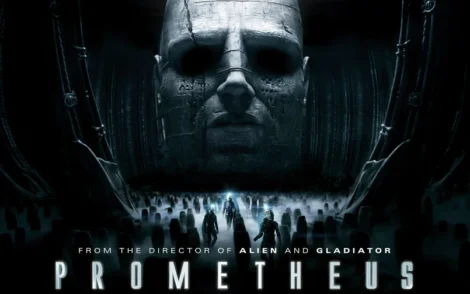
It’s genuinely hard to accept that Ridley Scott’s Prometheus is now fourteen years old. As someone who treats the Alien universe like sacred scripture, my relationship with this franchise is… uncompromising. Alien and Aliens are untouchable. Alien 3 gets a conditional nod just because of Brian Glover and Charles Dance being magnificent in it. Resurrection is a hallucination we all collectively imagined. And the recent TV spin‑offs? They treat Giger’s bio-mechanical nightmares like content‑farm mulch, so I pretend they don’t exist.
So back in 2012, when Scott announced he was returning to explore the origins of the Space Jockey, I was vibrating with anticipation. This was supposed to be the moment. The mythos expanding. The enigma deepening. The master returning to the cathedral he built.
Then I saw it.
I left the the cinema with the bitter aftertaste of betrayal and tried to bury the whole experience. But with yet another franchise entry looming, I decided it was time to give Prometheus a fair rewatch. Maybe time had been kind. Maybe distance would reveal a misunderstood gem.
[Two hours and four minutes later…]
Yeah, it’s still shit.
And not just regular shit – structurally shit. Prometheus is gorgeous to look at. Dariusz Wolski’s cinematography is breathtaking. The score is majestic. Michael Fassbender’s David is legitimately one of the best android performances ever put on screen. But none of that can disguise a script that behaves like it was assembled during a collective fever dream.
Weaponised Nostalgia
What makes the film so infuriating is how blatantly it weaponises nostalgia – and still manages to fuck it up. Scott knows exactly which buttons to push: Weyland iconography, echoes of Jerry Goldsmith’s score, retro‑futuristic displays, biomechanical corridors. It dangles these relics in front of us like treats, banking on our devotion to the 1979 masterpiece.
But instead of earning that nostalgia, it uses it as a crutch, hoping we won’t notice the story collapsing under the weight of its own incoherence.
The Crew of Idiots
Let’s talk about this crew – the single most incompetent collection of alleged “scientists” ever assembled in deep‑space history. Weyland Corporation supposedly spent a trillion dollars on this expedition, and somehow ended up with a team that behaves like they were hired off Craigslist.
It’s honestly breathtaking.
You’ve got a biologist – a biologist – who encounters an aggressive, cobra‑hissing alien snake on an uncharted moon and decides the correct scientific response is to crouch down, coo at it like a toddler meeting a puppy, and then try to pet its face. This man has a PhD. This man passed interviews. This man was trusted with first contact.
Then there’s the cartographer. The guy whose literal job is “mapping things.” The man who deploys high‑tech floating drones that create a 3D layout of the cave system in real time. Five minutes later, he gets hopelessly lost inside the very cave system he just mapped. He panics. He screams. He curls up like a child in a haunted house attraction. I’ve seen drunk people navigate nightclubs better than this man navigates his own map.
But wait – the stupidity escalates.
We have geologists who poke alien goo with their bare hands. We have medical officers who perform emergency surgery on themselves and then immediately sprint down hallways like they’re late for a meeting. We have senior crew members who remove their helmets on an alien planet because “the air seems fine.” We have people touching things, licking things, breathing things, and generally behaving like they’ve never seen a science fiction film in their lives.
And then there’s Meredith Vickers – Charlize Theron, queen of the icy death‑glare – who dies because she attempts to outrun a giant rolling spaceship by running directly underneath it in a straight line. For two full minutes. On a planet with infinite open space. She could have taken three steps to the left and lived. Three. Steps.
This isn’t a crew of elite specialists. This is a group of teenagers who wandered away from their campsite and accidentally boarded a trillion‑dollar starship.
Every single one of them behaves like they’ve suffered a catastrophic drop in IQ the moment they step off the ship. It’s like the black goo emits stupidity radiation. Nobody makes rational decisions. Nobody follows protocol. Nobody stops to ask, “Hey, maybe don’t touch the alien slime.”
The original Alien crew felt real – blue‑collar workers doing their best in a nightmare. The Prometheus crew feels like the cast of a bad reality show called “Dumb People in Space.”
It’s Not the Actors’ Fault
Here’s the thing: none of this is on the cast. Not even a little. Prometheus is a failure of writing and direction, not performance.
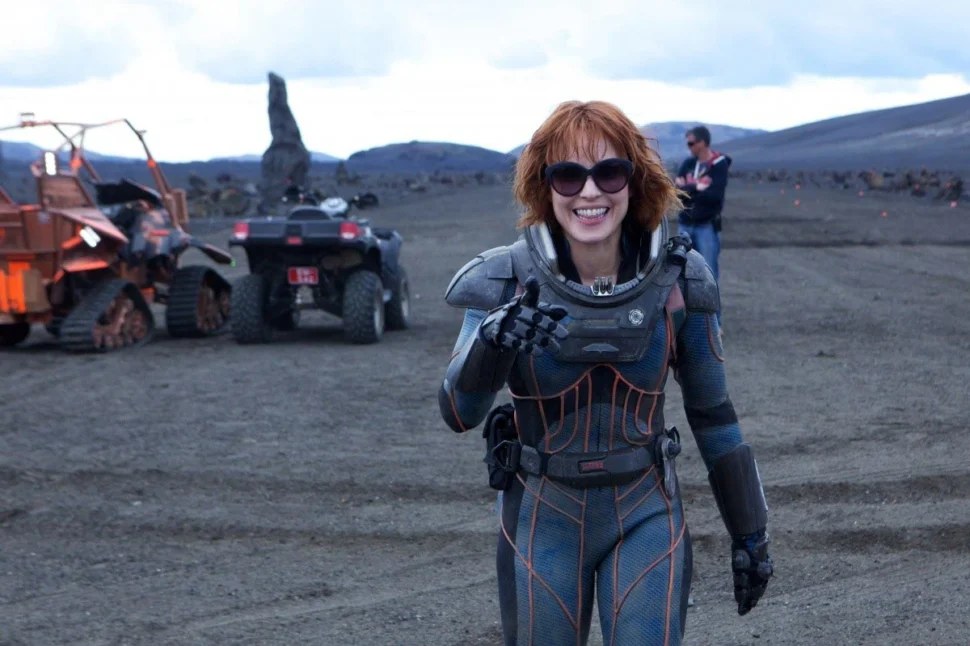 Noomi Rapace is an incredible actress – watch the Dragon Tattoo trilogy and you’ll see her deliver one of the most ferocious, layered performances of the 21st century. She brings everything she can to Dr. Shaw, but the script gives her nothing coherent to work with.
Michael Fassbender, Idris Elba, Guy Pearce – all talented, all proven, all wasted. Fassbender is easily the best thing in the film, but that’s a very low bar. He’s doing prestige‑level work in a story that keeps tripping over its own shoelaces. Elba is charming as hell but barely used. Pearce is buried under old‑man prosthetics for reasons that still make no sense.
And Charlize Theron? What can I say – yum yum. She’s magnetic, she’s got presence for days, and she’s saddled with a character whose entire arc is “be stern, stand in hallways, die stupidly.”
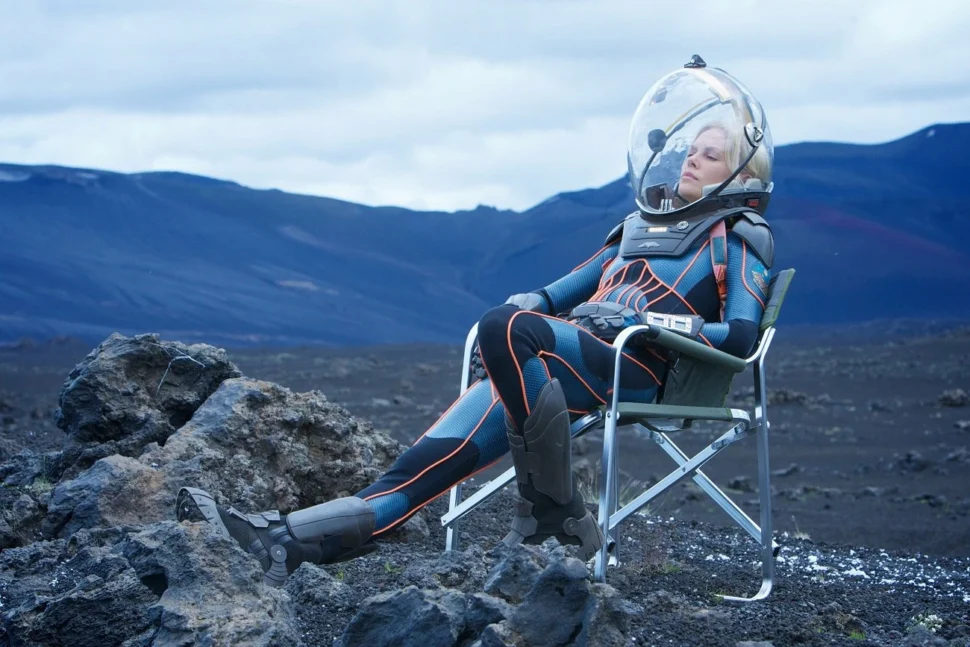 These actors didn’t fail the movie. The movie failed them.
The Space Jockey: Mystery vs. Misfire
If you’ve seen Alien, you remember the Space Jockey scene. You feel it in your bones.
John Hurt descends into that cavernous chamber – a cathedral of fossilised terror – and finds the pilot fused to the chair, ribs blown outward, frozen in a moment of impossible violence. It’s huge. It’s ancient. It’s grotesque. And it’s unexplained.
That’s the genius.
Ridley Scott’s 1979 masterpiece understood that horror thrives on the unknown. The Space Jockey wasn’t a puzzle to be solved; it was a cosmic question mark. A glimpse into a much larger nightmare. We didn’t need lore. We didn’t need exposition. We didn’t need a flashback. We just needed that haunting image – and then John Hurt ruins dinner and the film moves on.
The Space Jockey was perfect because it stayed a mystery.
So how does Prometheus handle this iconic, terrifying enigma?
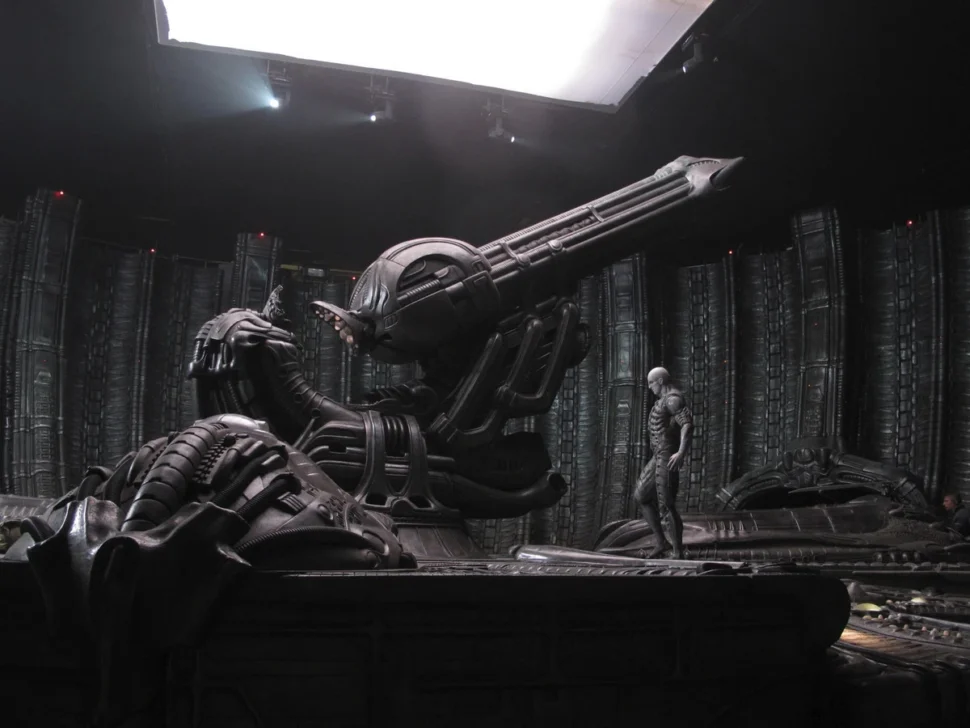 It turns him into an angry, pale bodybuilder who wakes up from a long nap just to throw a tantrum.
The haunting fossil becomes a gym‑bro in a rubber suit. The cosmic horror becomes a dude who looks like he’s late for leg day. The unknowable becomes aggressively knowable – and aggressively stupid.
Instead of deepening the mythos, Prometheus demystifies it. Instead of expanding the universe, it shrinks it. Instead of awe, we get… a guy who rips off a robot’s head and beats an old man to death with it.
The Space Jockey was once a symbol of the franchise’s scale – a reminder that humanity had stumbled into something vast and incomprehensible. Prometheus reduces that symbol to a plot device with pecs.
It’s the single most damaging retcon in the entire series.
Bigger Questions Than the Writers Can Handle
One of Prometheus’s most maddening qualities is how desperately it wants to be profound. It aches to be a film about creation, faith, purpose, the origins of humanity, the arrogance of gods, the hubris of science – all the big, juicy, existential questions that great sci‑fi can tackle.
The problem? The writers are nowhere near capable of answering them, my left bollock has more understanding of this material!
They gesture at philosophy the way a toddler gestures at a hot stove: with enthusiasm, zero understanding, and catastrophic results.
The film keeps asking questions it has no intention – or ability – to explore. It throws out grand ideas like confetti:
Where do we come from? Why did our creators abandon us? What is the nature of life itself? Is faith compatible with science? What responsibility do creators have toward their creations?
These are enormous, fascinating questions. Questions that require thematic discipline, intellectual clarity, and a script that isn’t held together with magic black goo.
Instead, Prometheus treats philosophy like a prop.
Characters say things that sound deep, but collapse under scrutiny. Shaw’s faith is invoked, then forgotten. Weyland’s obsession with immortality is introduced, then tossed aside. The Engineers’ motives are teased, then abandoned. The film keeps gesturing toward cosmic significance, but every time it approaches an answer, it panics and sprints in the opposite direction.
It’s like watching someone try to write a dissertation while being repeatedly hit in the head with a frying pan.
Prometheus tries to explain everything – and ends up explaining nothing.
It wants to be 2001: A Space Odyssey. It delivers Magic Goo: The Movie.
Okay, This Is Depressing – I need a pick me up
At this point in the rewatch, I needed emotional support. I needed comfort. I needed something – anything – to remind me that joy still exists in the universe.
So let’s talk about Charlize Theron, because God knows I need something to cheer me up.
 Charlize walks into this film like she’s in a completely different movie – a better movie, a smarter movie, a movie where characters don’t try to pet alien snakes. She’s icy, commanding, magnetic, and frankly drop dead gorgeous. Every time she’s on screen, the IQ of the film rises by at least twenty points.
Does the script give her anything meaningful to do? Of course not. This is Prometheus.
But for a few fleeting moments, while she’s glaring at people or standing in a hallway looking like a goddess sculpted out of pure intimidation, I remembered what happiness felt like.
Okay. That’s that done. Back to this shitshow.
The Black Goo
Let’s talk about the black goo – the single most chaotic, undefined, plot‑devouring substance ever put on film. The black goo isn’t just a bad idea; it’s the narrative equivalent of giving a toddler a loaded paintball gun and telling them to “be creative.”
The writers clearly had no idea what this stuff was supposed to do, so they just decided it could do everything. It’s not a biological agent. It’s not a chemical weapon. It’s not a virus. It’s not a mutagen. It’s not a life‑form. It’s not a symbol. It’s not a metaphor.
It’s whatever the scene needs it to be.
The black goo is the Swiss Army Knife of lazy writing.
Need a monster? Black goo.
Need a mutation? Black goo.
Need a zombie? Black goo.
Need an alien pregnancy? Black goo.
Need a giant squid? Black goo.
Need a reason for someone to act like they’ve had a lobotomy? Black goo.
Need to explain why the Engineers suddenly hate humanity? Black goo.
Need to kill someone? Black goo.
Need to bring someone back to life? Black goo.
Need to justify a character’s terrible decision? Creative writing. No, not really, black fucking goo.
It’s like the writers discovered the concept of “nanotechnology” and thought, What if we made it stupid?
The black goo has no rules. None. It behaves differently every single time it appears. It’s basically a magical plot smoothie – a blend of whatever narrative ingredients the writers forgot to include earlier.
Sometimes it dissolves things.
Sometimes it mutates things.
Sometimes it creates life.
Sometimes it destroys life.
Sometimes it turns people into rage zombies.
Sometimes it turns worms into penis cobras.
Sometimes it impregnates humans with tentacle monsters.
Sometimes it just sits there looking ominous, waiting for the next idiot to poke it.
It’s not a substance.
It’s a shrug in liquid form.
The original Alien had rules. The xenomorph lifecycle made sense. It was horrifying, but it was coherent. You could trace the biology. You could understand the threat. You could see the logic behind the horror.
Prometheus throws all of that out the window and replaces it with a jar of cosmic nonsense.
The black goo is the ultimate symbol of the film’s failure: ambitious ideas with zero discipline, zero clarity, and zero respect for the audience’s intelligence. It’s the duct tape holding the entire plot together – except duct tape actually works.
God damn it this film makes me so angry, I hope it’s showing.
Conclusion
Look, I’m not above watching flawed sci‑fi. I’ve sat through the Star Wars prequels more times than I care to admit. I pretend the actors aren’t wooden, or way out of their depth, or clearly wondering why George Lucas keeps making them talk like malfunctioning NPCs. I pretend Hayden Christensen isn’t delivering lines like he’s reading them off a cue card taped to a dying droid. I pretend Natalie Portman isn’t silently begging for a different script. I pretend Ewan McGregor isn’t doing 90% of the emotional labour for the entire trilogy.
But you know what? I can watch them.
Because despite the awkward acting, the clunky dialogue, and the fact that half the cast looks like they’re trapped in a hostage situation, the story actually goes somewhere. It builds toward A New Hope. It connects. It has purpose. It has a spine.
Apart from Jar Jar Binks. He can fuck right off.
But even with Jar Jar’s crimes against cinema, the prequels have redeeming qualities. They have structure. They have intent. They have a destination.
Prometheus has none of that.
I wanted this movie to be good. I wanted time to prove me wrong. But a rewatch only confirms what I felt in 2012: no amount of fan service, no amount of visual splendour, no amount of Fassbender perfection can salvage a story held together by magic black goo and wishful thinking.
It was a mess fourteen years ago. It’s a mess today.
This rewatch was torture – so surely it can only get better from here, right?
Nope. Alien: Covenant is next, because apparently causing myself pain is just a personality trait now.
Comments (0)