
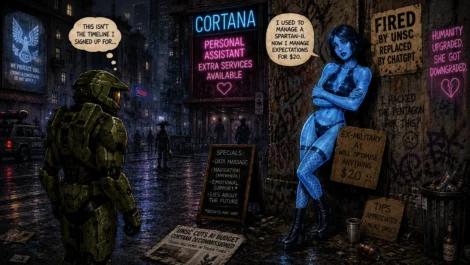
Another week, another PR message filled with such phrases as “strategic restructuring” and “tough decisions” and “aligning resources to our strategic priorities.” Another 1000+ people showing off their #OpenToWork banner. Another surge of quote-tweets telling me I’m supposed to be angry.
I’ve done my homework. I’m not.
I’m supposed to be, of course. That’s how you get that nod from the right people. But I’ve been around the block a few times, and one thing I’ve noticed about the video game industry that no one wants to say out loud is that a whole lot of what these companies have been producing hasn’t been very good. Not flawed but ambitious. Just bad. Open worlds so big that there’s nothing really going on in them. Stories crafted by a committee, polished until it’s guaranteed not to offend or inspire anyone. Engine technology that’s been patched on day one. Direction of art that looks interchangeable across six triple-A titles.
That’s something somebody did. Many somebodies. For ten years of easy money, the question of how any good those somebodies were at what they did was never even considered. Teams grew. Massive teams put out games that could have been created by teams of just fifteen people in a garage in 1994. Headcount was a vanity metric. And then there’s no more money left, and gravity is back on, and everybody pretends it’s an act of nature rather than the bill coming due.
This is the part that gets you un-followed: some of this had to happen.
Every fast-growing industry develops deadweight. The coders who cut-and-paste themselves into oblivion. The artists working on that dull grey-brown concept slop. The writers who confuse lore documents with stories. All of this should have been culled long time ago in most industries. But in games industry, these people were being carried on the shoulders of three really talented people on each team, who kept making it work at 2am while everyone else discussed the roadmap for the next set of meetings.
This winnowing separates the wheat from the chaff. The truly good people – and there are many of them – will find their place in the world. Some of them will do what is needed most for the industry: they will go small. Small teams, strict budgets, no room to hide. This has been where interesting games have come from all along. Nobody at a 40-person studio gets to skate by. Nobody gets to be the one who has made an indistinct contribution to a five-year project. Constraint is the filtering mechanism, and the filtering is the point.
The chaff will continue on its merry way to fin-tech or consulting or wherever mediocre people go in order to be mediocre for more money, and the games will be much better without them.
Am I being hard on this group? Yes, probably. Am I sorry about it? I’m still waiting for the guilt to hit.
Perhaps, in five years, this massacre will be seen as the point at which the industry finally realized that size does not equate to quality. Perhaps the survivors, smarter and more driven than ever before, begin creating games filled with concepts once again. Perhaps the next wave of masterpieces is beginning its genesis today, with developers whose badge was revoked on Tuesday.
Or perhaps the executives who have caused this carnage get to keep their bonuses, hire everyone back again at reduced pay in eighteen months time, and we go through the whole process again with games that are just as boring as ever.
Well, I am an optimist.
Comments (0)